Main office
Cincinnati
4325 Mt Carmel Tobasco Rd, Unit 1Cincinnati, OH 45244

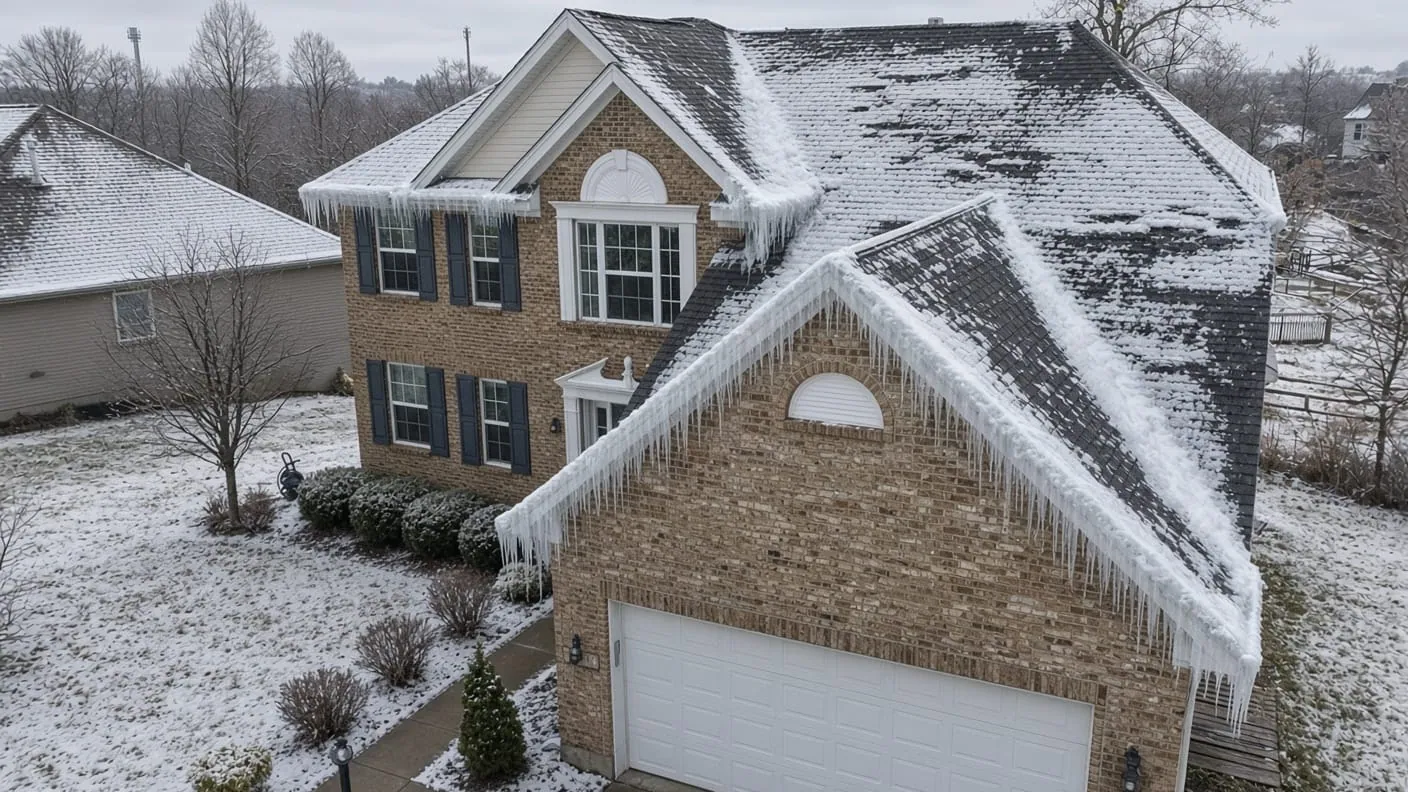
We remove ice dams, and we look at the ventilation, insulation and roof-edge protection that decide whether water gets into the house.
An ice dam is a ridge of ice at the roof edge. Snow melts higher up the roof, runs down, and refreezes at the cold eave. Water then backs up behind the ice.
Thick ice along the eaves or in the gutters, large icicles at the roof edge, and water stains on ceilings or exterior walls after a snow.
Water that backs up can work under the shingles and into the house. That means wet sheathing and insulation, stained ceilings, and extra weight on the gutters.
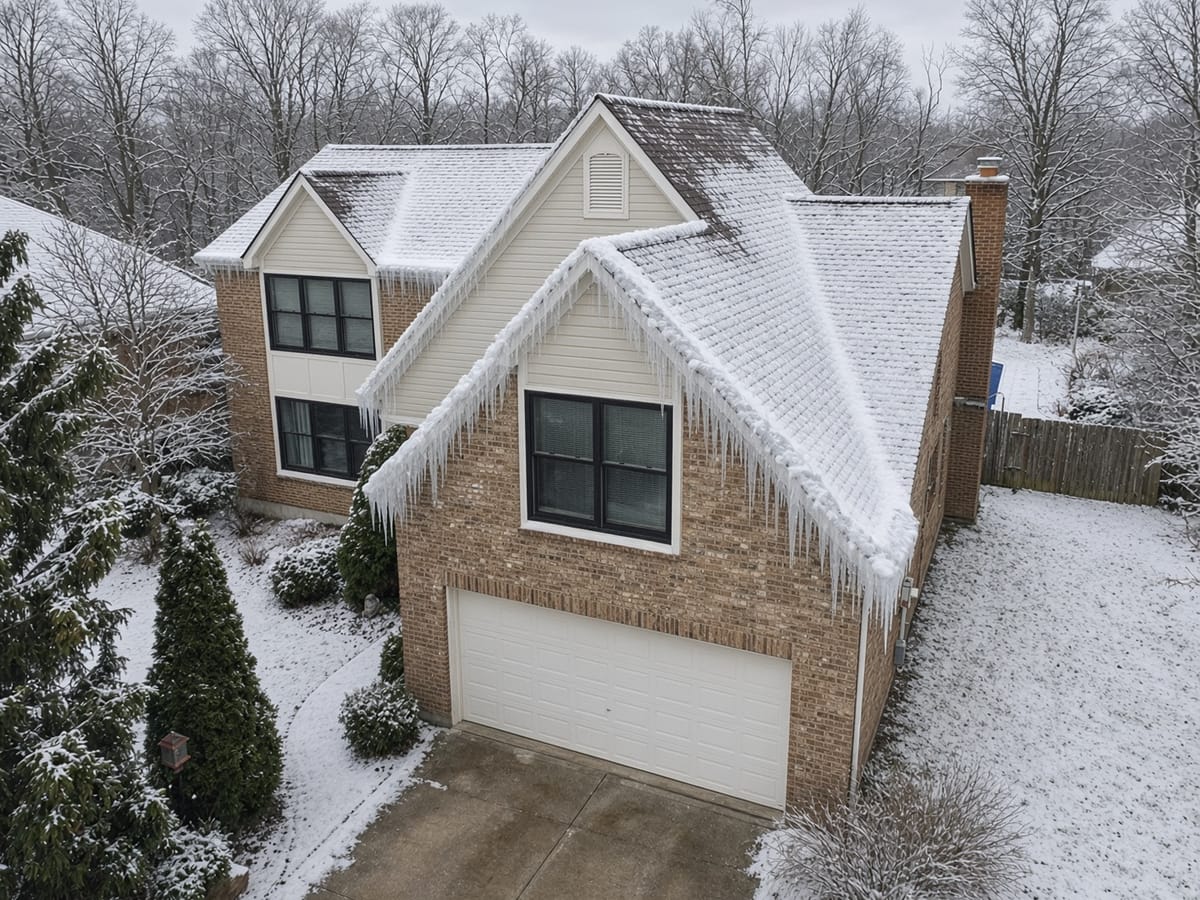
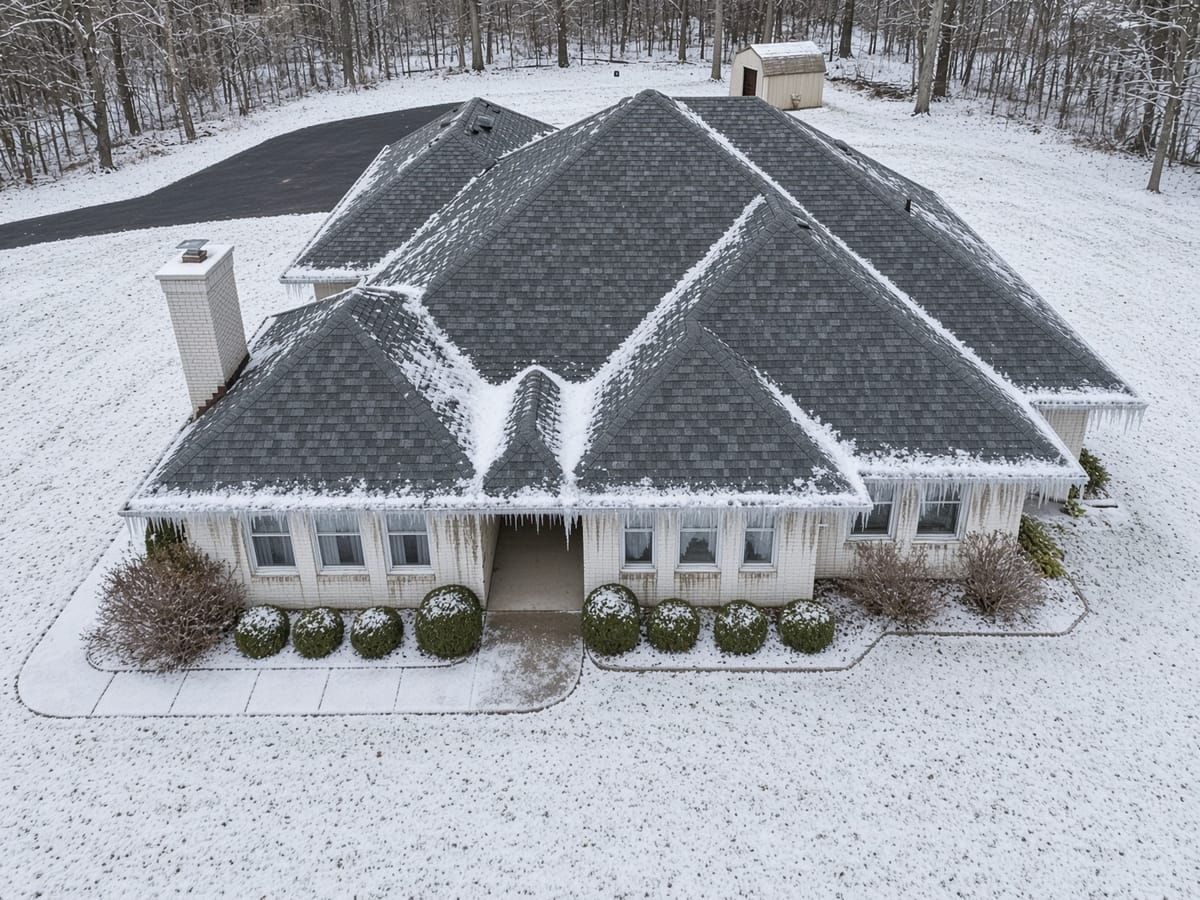
When an ice dam forms on your roof, we can remove it.
How we remove a dam depends on the roof and how much ice there is. We'll tell you the plan and the price before we start.
Ice dam work means ladders and an icy roof edge. It's easy to damage shingles and easy to get hurt, which is why it's a job for a roofer.
Ice dams start with heat and air in the attic, so that's where prevention starts.
Every roof needs intake and exhaust, so outside-temperature air moves through the attic. We check ventilation and intake on every inspection, and attic insulation is part of the Owens Corning Top of the House system we're certified in.
This stronger underlayment goes along the roof edges and in the valleys. It doesn't prevent ice dams, but it stops water from seeping back into the house when they form. Code calls for it to reach 24 inches past the interior wall.


Local Experience Matters. We work on shingle roofs across Greater Cincinnati, and many of the older ones have no ice and water shield at all.
People picture ice dams as a far-north problem. Southwest Ohio gets them for a different reason: our winters swing. A snowfall is often followed by a few days that hover around freezing, warm enough in the afternoon to melt snow on a roof and cold enough at night to freeze it again at the edge.
That cycle is exactly what builds a dam. It also means the ice can form quickly and catch a homeowner out, because the roof was fine all through the last cold snap.
The roofs most at risk are the ones with warm attics and little protection at the eaves, which describes a lot of homes built before ice and water shield became standard.
The ice is on the outside. The damage rarely is.
Water that backs up under the shingles runs down inside the wall or across the ceiling. The stain tends to appear near an outside wall.
Wet insulation stops insulating, which lets more heat reach the roof and makes the next ice dam more likely.
Wood that gets wet every winter eventually goes soft. This is the damage that stays hidden longest.
A gutter full of ice is very heavy. It can bend, pull its fasteners and take the fascia board with it. See soffit and fascia repair and gutters.

No. It doesn't prevent them. It stops water from seeping back into the house when they form.
Ice and water shield wasn't code about 15 years ago. Roughly 35% to 45% of the roofs we replace don't have it.
A new roof adds ice and water shield at the edges and valleys, and we size the intake and ventilation. That protects the house, though ice can still form in the right weather.
Yes. It takes 30 minutes to an hour and includes a check of your attic ventilation and intake.
We serve Greater Cincinnati and Northern Kentucky. Check our service area, or see ice dam removal in Blue Ash if you're north of the city.
Have it looked at once things thaw. Wet insulation and sheathing don't always dry out, and the damage builds each winter.
Keeping gutters clear in fall helps water drain. The lasting fixes are in the attic: ventilation, insulation and sealing the places where warm air leaks up from the rooms below.
Two locations serving your community. Our office team is in Monday to Friday, 8AM to 5PM.
Main office
Tell us what you're seeing at the roof edge, and we'll take a look.
Rated 4.9 on Google. Read our reviews