
Tell Us What You See
Ice at the edge, water inside, or both.

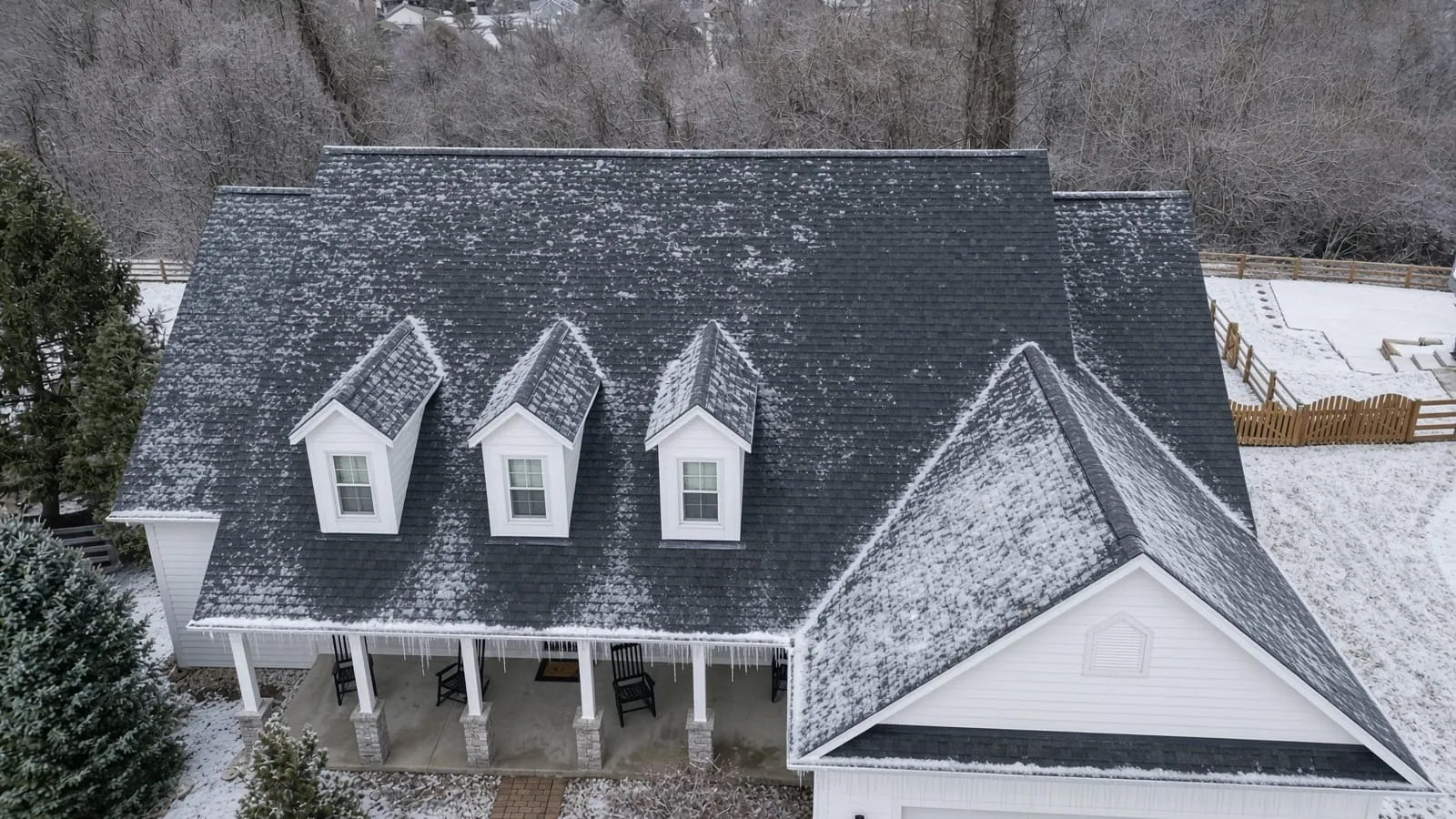
We remove ice dams from Blue Ash roofs and look at the attic and roof edge that let them form.
An ice dam is a band of ice that forms along the lower edge of a roof. It isn't just heavy. It holds back the water that melts above it, and that water has to go somewhere.
We remove ice dams, and then we do the part most people skip: working out why this roof made one.
Our Blue Ash office is at 6824 Ashfield Dr, Suite 200, and the office team is in Monday through Friday, 8AM to 5PM.
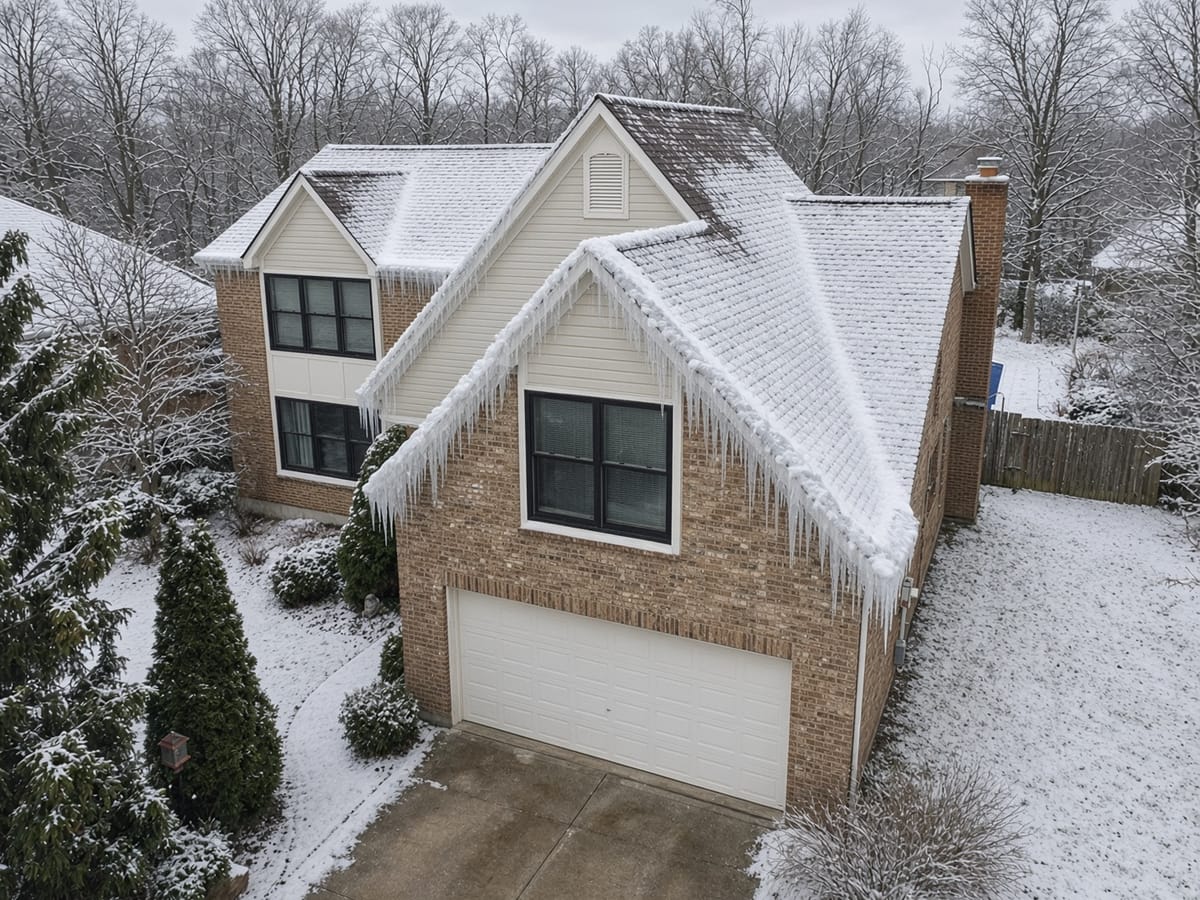
It takes three things: snow on the roof, a warm roof deck, and a cold roof edge.
Warm air from the house leaks into the attic and warms the underside of the roof. The snow sitting on that part of the roof starts to melt, even when the air outside is below freezing.
The meltwater runs down until it reaches the overhang. There is no warm attic under the overhang, so the water freezes again.
Each day adds another layer. Eventually the ice is thick enough to hold a pool of water behind it, and standing water is something shingles were never meant to stop.
Look for these after a few days of snow cover and cold.
The usual instinct is a ladder and a hammer. Both are bad ideas on an icy roof edge.
Chipping at ice breaks the shingles underneath, which are brittle in the cold. It also puts you on a ladder standing on frozen ground under a load of ice. People get hurt this way every winter.
We'll tell you how we plan to remove the dam on your roof and what it will cost before we start.

Removing a dam solves this week's problem. These are what protect the house next time.
Every roof needs intake and exhaust: outside air entering the attic low and leaving high. Moving air keeps the roof deck closer to the outdoor temperature, so the snow melts more evenly. We check intake and ventilation on every inspection.
Insulation is one of the four parts of the Owens Corning Top of the House system, along with the roof, intake and ventilation. We're certified in that system.
This stronger underlayment goes along the roof edges and in the valleys. It doesn't stop ice dams from forming. What it does is stop the backed-up water from seeping into the house. Code calls for it to extend 24 inches past the interior wall.
Ice and water shield wasn't code about 15 years ago. Roughly 35% to 45% of the roofs we replace were built without it, which is one reason an older roof leaks from an ice dam that a newer roof would shrug off.
Ice at the edge, water inside, or both.
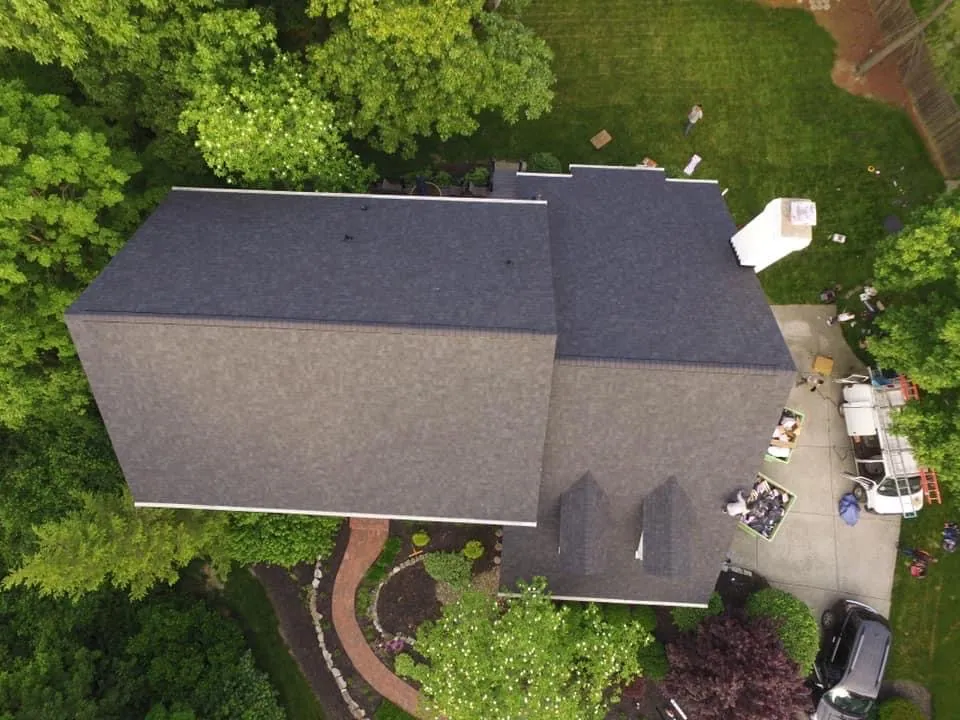
From the ground, by drone and at the eaves.
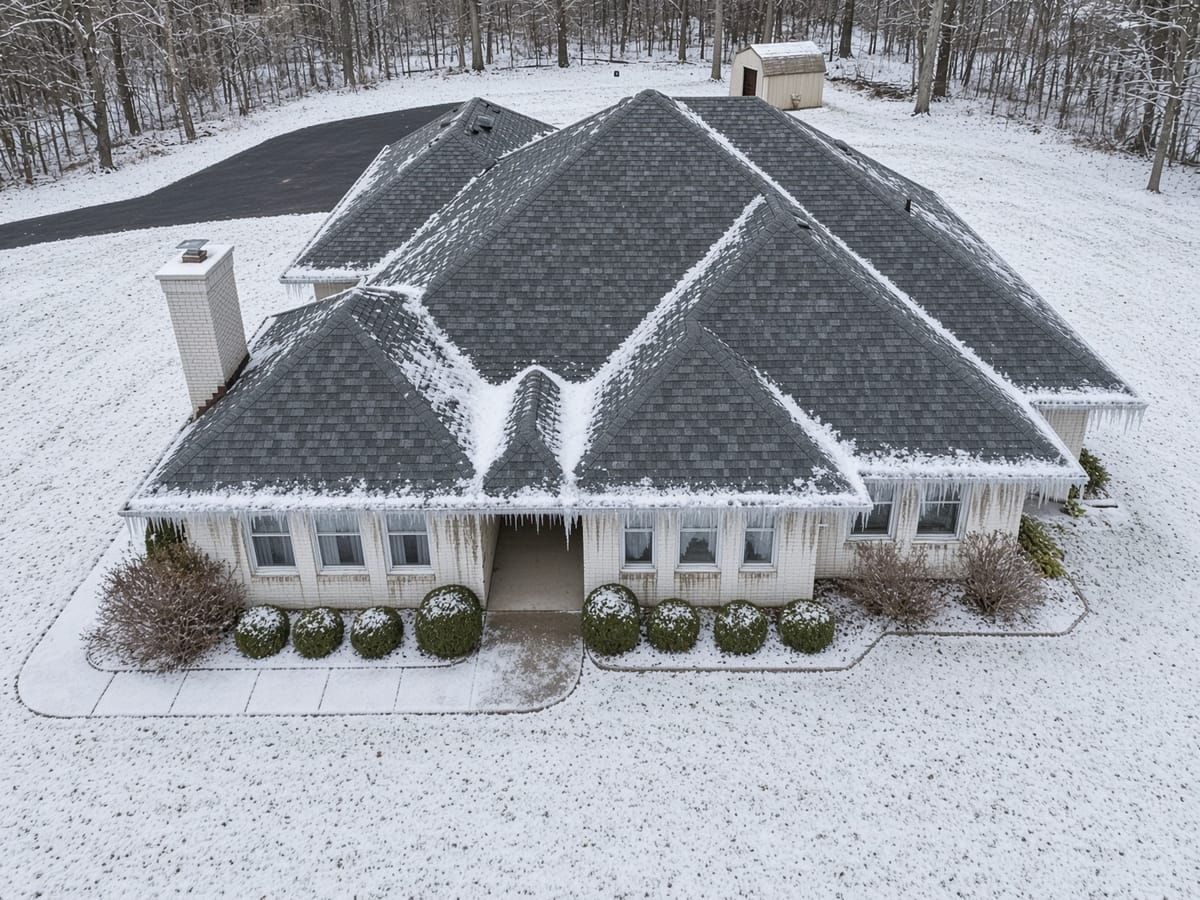
After you've heard the plan and the price.

Ventilation, insulation, edge protection, or all three.
Water from an ice dam usually shows up as a stain where the ceiling meets an outside wall. Once things thaw, the roof may look fine from outside while the insulation and sheathing underneath are still wet.
We'll check the attic when we can get into it and tell you what we find. If shingles or flashing were damaged, our Blue Ash roof repair team handles it.
If the gutters or the fascia took the weight, see gutters and soffit and fascia repair.

Once the ice is gone, a few minutes of looking can save a repair later.
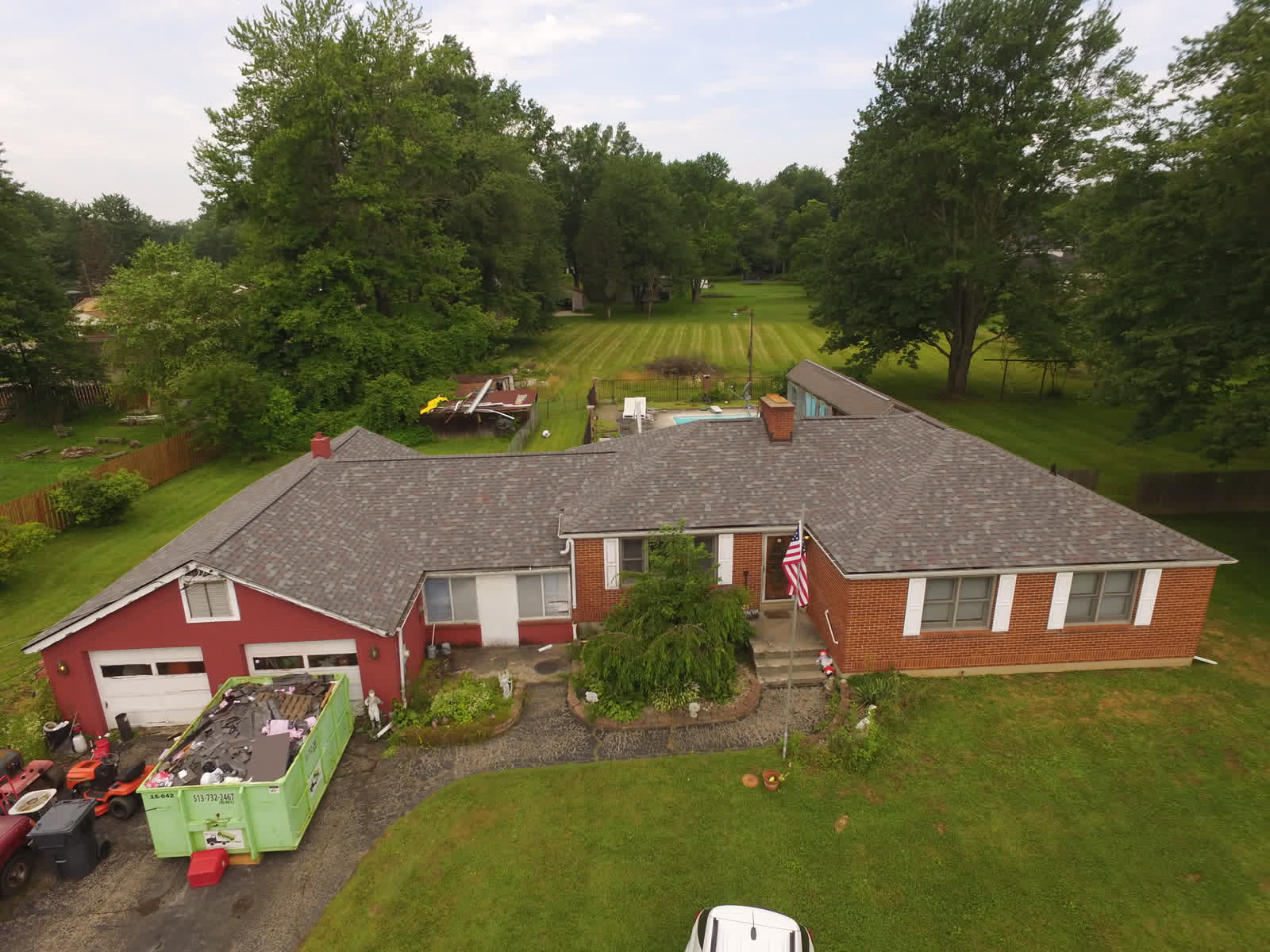
No. Icicles can form on a healthy roof. An ice dam is a solid ridge along the roof edge with water backing up behind it.
No. It doesn't prevent them. It keeps the water behind the dam from getting into the house.
If it's an older roof, it may not. We can often tell at an inspection, and every roof we install gets it at the edges and in the valleys.
It protects the house much better, because it adds ice and water shield and properly sized ventilation. Ice can still form in the right weather.
Yes. The weight can bend them or pull them off the fascia.
Yes. It includes a check of your attic ventilation and intake.
Usually because more heat is reaching your roof deck. Attic ventilation, insulation and air leaks from the rooms below all play a part.
Our Blue Ash office is at 6824 Ashfield Dr, Suite 200. The office team is in Monday to Friday, 8AM to 5PM.
Tell us what you're seeing at the roof edge, and we'll take a look.
Rated 4.9 on Google. Read our reviews